Trucking Accidents and Recoverable Damages

index


http://www.timesfreepress.com/news/local/story/2015/aug/05/second-lawsuit-filed-against-truck-driver-deadly-i-75-crash/318323/

This accident occurred a while back, but it’s hit the news again due to a new lawsuit against the driver and the trucking company.

In summary, it was another of those trucking tragedies you hear about all the time…trucker who is overdoing it to get his job done more quickly causes horrific accident.

In this case 6 people were killed and more badly injured.  Sadly, not only had this driver driven for 65 hours with only a 12 hour break after the first 50, but he was apparently on narcotics at the same time.  And of course, he tried to fudge his reports afterword.  There’s a saying that it’s not the crime, but the cover-up, that gets you.  In this case, it will be the crime AND the cover-up.

In TN you may apparently list out how much money you want, whereas in NC we are limited to pleading amounts “not to exceed” or “in excess of” certain threshold amounts depending on the court you desire (Superior or District).  In the TN case the victims are asking for $2.5 million in compensatory damages and $10 million in punitive damages.

For the uninitiated, compensatory damages are to pay back the victim for their financial losses resulting from the incident.  Medical expenses, lost wages, and pain and suffering are the traditional big three.  In wrongful death cases the heirs may also recover loss of companionship and future earnings.  Punitive damages, on the other hand, are not (exactly) based on compensatory damages; this category is meant to punish the behavior that led to the incident and to hopefully give pause to the next person who is considering such behavior.  In North Carolina punitive damages are in one way influenced statutorily by the amount of compensatory damages.  They are capped at the greater of $250,000 or three times the compensatory damages.  To me, that’s absolute BS.  But it’s the law.  However, there is one gloriously fair exception to that limitation, and that is for punitive damages from auto accident claims that came about due to driving while intoxicated.  I love that one.

If you were killed in an auto accident, how much money do you think your family should get?  Do you think punitive damages should be limited?  How do you feel about the DWI exception?  This is stuff I like to talk about.  Let me know your thoughts.  And of course, if you have an injury claim, holla!

Amusement Park Ride Safety Tips

amusement-park-injury-1

I avoid amusement park rides like the plague.  Seriously, who thinks these things are safe?

OK, statistically, we’re not talking Russian Roulette here.  I know.  For the number of successful rides, particularly at big, established parks, compared to the number of incidents (overwhelmingly at local/traveling events) you have a pretty good chance of not getting injured riding these rides.

http://www.scrippsmedia.com/newschannel5/news/Woman-Files-Lawsuit-After-Beech-Bend-Ride-Flips-Over-319067981.html

But that doesn’t mean you can’t be injured.  The above article talks about a woman and child being injured when a ride flipped over.  The whole ride flipped over!  Would you want to take that little jaunt?  Not me.

Tons of stuff can go wrong on these things.  Belts slip, bolts loosen, carnies are carnies, so you never really no for sure if the ride you’re on is safe.  There are organizations that provide tips for ride safety:

http://www.iaapa.org/safety-and-advocacy/safety/amusement-ride-safety/amusement-ride-safety-tips

But most of those tips deal with obeying rules.  Sure, do that.  But that’s your minimum standard.  I have my own set of rules:

1. Just don’t ride ’em. There. You’re safe.

2. If you must ride an amusement park ride, considering the following:

a) If it’s mobile (meaning the ride itself can be picked up and moved to the next county), don’t ride it.

b) But if you must ride it, look at who is in charge of it.  If you’d trust him/her to help you on the side of the road, OK.  If not, trust your gut.

There’s a great chance that you’re going to be fine riding any carnival or amusement park ride.  But just remember to obey the rules and trust your gut.

More Money = Safer Car…surprised?

girlinaccident

https://www.yahoo.com/autos/how-the-size-of-your-wallet-protects-you-in-a-car-123390976917.html

Check out this article above.  To summarize, it appears that the more expensive your car is, generally, the safer it is in a crash.

From the article:

“We found that vehicle type, curb weight and price are all significant predictors of personal injury cost,” said Dietrich Jehle, a professor of medicine and biomedical research at the University of Buffalo. “For every additional $10,000 you spend, injuries go down by almost 12 percent. We also found that for every 1,000-pound increase in weight, vehicles were 19 percent safer.”

That’s pretty compelling stuff.

So if you’re interested in keeping yourself and your family safer on the road, spend more on a car.  More specifically, spend more on a heavier car.

Now, where did all of those Hummer dealerships go…?


Stop Sign/Stop Light tickets – Orange, Chatham, Durham, Wake, Alamance Counties

stop


I got a call from a great old client this morning.  His wife had gotten a stop light ticket and was wondering if she should pay it off.

No.  You should not pay off a stop light or stop sign ticket.

Paying off = pleading guilty.  Guilty = conviction.  Conviction = 1 insurance point.  1 insurance point = a 30% increase of your insurance rates for 3 years!

So, no.  Don’t pay those off!

If you get a stop light/stop sign ticket, particularly in the counties listed above, call me to discuss your option.  For a few hundred bucks I can probably save you a lot more!

Slip & Fall Claims, Premises Liability, and Strict Liability

Durham Chapel Hill Attorney

One of these things is not like the other.  One of these things does not belong.

Strict Liability refers to claims that a government might designate as having no need to prove that an act or omission on the part of the defendant led to the injury; if the event happened, you’re liable.  For example, technically under strict liability tenets, if your dog bites someone, you’re on the hook.  Period.  It doesn’t matter if he was on a leash, it doesn’t matter if it was a creepy vacuum cleaner salesman who stepped into your door uninvited.

In North Carolina premises liability claims – claims for injuries suffered on someone’s property – are NOT strict liability.  In other words, you have to prove that the property owner/manager’s negligent act or omission was the cause of your injury.

A slip & fall case is merely a type of premises liability claim, and is probably the most common, so I deal with these more than any other premises liability claim.  These are NOT strict liability.  So if you slip/trip and fall on someone’s property they are not automatically responsible for whatever injuries you suffer.  You have to prove that some negligent act or omission caused you to slip and fall.

If you are going to remember anything from this article, you should remember the last two sentences above.  Go read them again.

For example, you’re going up a set of stairs at a restaurant and you miss a step and get hurt.  Why did you miss a step?  If you don’t know why, or it’s because you just did, they don’t owe you for that.  If it’s because the steps were too shallow according to code, there was a loose tile, there was a banana peel, or whatever, then maybe they do owe you.

So, if you’re ever hurt somewhere, think about why you’re hurt.  Is it because you’re a clumsy oaf?  If so, then you aren’t owed anything.  But if it’s because the owner left some spent uranium in the middle of the floor, then you might have something.

3 Questions You Should Ask Before You Hire A Lawyer

Jeffrey Howard_101109_0008 (2)

What do you really need to know about an attorney before you hire one?  What are the most important things to ask?

No, you don’t ask her where she went to law school.  That is irrelevant. If you must know, look at her diploma.  But who cares?

Newsflash: We all pretty much learn the same stuff.

In my experience, it’s far more important what your prospective attorney does after law school, particularly with their clients and their practice.  These are the things that really matter:

1. Is my type of case your main practice area?

The days of the generalist are essentially done.  No longer do you go to the same attorney for your will, your divorce, your accident case, your worker’s comp issue, your bankruptcy, and your weed ticket.  Sure, there are people around that still practice this way, but I think it’s wiser to hire someone who has a practice focus.  That doesn’t mean they only do one thing necessarily, it just means they limit their practice to two or three areas of law at most.  Think about it: the more you spread yourself out, the thinner your knowledge base is likely to be. You don’t want shallow knowledge.  You want deep knowledge.

2. Who in your office will most of my communication be with? 

This is very important.  You’re looking to hire an attorney. You are not looking to hire a paralegal, or a case manager (whatever the hell that is).  You want to be able to communicate quickly and efficiently with your attorney to help get you the best results.  If you’re looking at a prospect with tons of staff for her to delegate to, do you really think that attorney is going to be fielding your phone calls/emails?  You want to deal directly with your attorney.  Your case is far too important not to.

Here’s a great tip:  After the interview but before you hire them, call to speak to the attorney you interviewed with.  If you get to talk to them (then, or if they return your call shortly) that’s a good sign.  If they won’t talk with you to get your business, you know darn well they won’t be talking with you when they already have you signed up. 

3. What is your main goal with cases like mine?

No one ever asks this question.  Ever.  And it boggles my mind.  What they DO ask in the personal injury context is “how much is my case worth?”  but that’s a different question.  What is your attorney’s goal with your type of case?  Many won’t have a good answer (because they don’t think about it and are never asked).  I think about it all the time.  In fact, even if they don’t ask (and they don’t) I tend to tell clients anyway:  My answer, particularly for personal injury cases (auto accidents, dog bites, etc.) is to have a client who feels happy with my work, regardless of outcome, so that he will refer his friends and family when the time comes.  That’s my goal. I want my client to feel like I did everything I could to make sure they were treated fairly.  Sure, I want to win.  Sure, I want to get my clients a lot of money.  But in the end, the financial goal isn’t the main one.  I want the client to feel good about my work.

That’s it.  Don’t worry about what their “win percentage” is, and don’t worry about what their biggest settlement is.  Don’t worry about if they routinely get people out of DWIs.  Worry about their familiarity with your type of case.  Worry about their willingness to communicate with you.  Worry about whether or not they are worried about what you think of them after you case is done.

Now if you’ll excuse me, I have to go communicate with my clients.

Save the Fox

hfoxttps://www.facebook.com/groups/830041923748960/

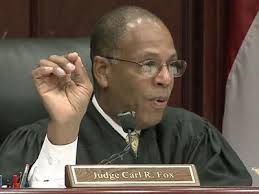
Judge Carl Fox has been a fixture in the Orange County community for decades.  I can always count on a fair hearing from him in court, and out of court I can always count on a warm greeting and engaging conversation.  Judge Fox treats people they way he would want to be treated, and in the end, I think none of us can do any better than that.

If you can help him in his fight against cancer, do so.

Coffee Burn Cases – Know when to hold ’em, know when to fold ’em

2_28_11_SupremeCoffee7598

Everyone has heard about the original “hot coffee” case of Stella Liebeck against McDonalds.  Many people think they know what that case is about, but they probably know virtually nothing about the facts.  If you’re looking for an education on that particular case and the vitriol of “tort reform” that followed it, I urge you to watch http://www.hotcoffeethemovie.com/ but discussion of that movie is for a different day.

In North Carolina a case was recently taken to trial wherein a man sued Starbucks for burns he received when the lid of a coffee he’d gotten from Starbucks came off.  http://abc11.com/news/starbucks-not-liable-for-raleigh-police-officers-burns/713613/

Sadly for him the jury sided with Starbucks.

Let me first say that I’m not the world’s foremost expert on hot coffee or coffee burn cases.  But I have handled them before and the best advice you can get before making a claim against a coffee retailer is this:  Know when to hold ’em and know when to fold ’em.

What I mean by the Kenny Rogers reference is that, like with any case, you have to know when you have a good argument and when you don’t.  To get deeper into the meaning of this advice though, consider this little nugget.  Dan Cox is considered by many to be the go-to expert on hot coffee or coffee burn cases, mostly for the defendants (the retailers) and in his book Hot Coffee he essentially says there are two types of coffee burn cases (and this is my summary of his statement, not a quote):  When the employee spills the coffee on the patron, they need to settle that case, but when the patron spills it on himself, the retailer may be beetter off fighting it. 

Is this gospel from on high?  Of course not.  But it is based on a rather detailed investigation of the many coffee cases across the nation.  For the most part, juries don’t seem to have much sympathy (with some exceptions) for people who spill coffee on themselves.  But they do have sympathy for people who have coffee spilled on them.  And when I think about it like that, it makes complete since.

I wonder if this case would have played out differently if the employee had spilled it.  If other cases are any predictor, it might have.  But that wasn’t the scenario he had…

Be careful with your coffee, and don’t get burned by it.


What is NOT covered by Workers’ Compensation in NC?

bluescale

I’ve already written a (I think several) post(s) on what is covered by Workers’ Compensation in NC.

But I think it makes sense to approach this question from a different perspective:  What is NOT covered by Workers’ Compensation in NC? There is one big thing that most people don’t know.

Let’s start by saying that Workers’ Comp (WC) is NOT like a basic personal injury case.  In a personal injury case in NC you might be able to recover medical expenses, lost wages, and pain and suffering (maybe some other stuff, but these are the main three).  In WC claims you don’t necessarily get all of that.  As I’ve explained before, WC really only covers three things:

1) Payment for your time out of work, but reduced to 2/3 of your average weekly wage;

2) Payment of your medical expenses, but directed by/essentially controlled by the insurance company, and;

3) Payment for any permanent disability, be it partial or total.

So what do you NOT get from WC in NC?

Well, you don’t get ALL of your wages.  You only get 2/3 of your average weekly wage.  The theory being that you’d lose about 1/3 of your gross earnings to taxes/FICA, etc., so they are only on the hook for the other 2/3. But that’s not the worst of it.

You also don’t get pain and suffering.  That’s the big one that people don’t realize most of the time.  It’s somewhat deflating to people when they come in with a claim where they think they are “covered” for all of their losses, only to find out they essentially just get made whole from a financial loss standpoint and there’s nothing to pad the claim with or otherwise “award” them for the suffering they endured as a result of their injury.  This is the hardest thing for most people to accept.  It is in someways ameliorated by the permanent impairment provision, but not always.

“Why is that”, you ask?

I like to say that the “Comp” in Workers’ Comp stands for “Compromise.”  You see, before the Act, if you were hurt at work you got nothing unless you could prove your employer was somehow negligent.  Under the Act, fault doesn’t matter (for the most part), so you’re covered, at least to the point that the Act requires.  In the bad old days, if it was your fault, you were stuck holding the bag and got zilch from your employer.  So the WC Act is a compromise between helping injured workers with a safety net of some sort, but not exposing employers to burdensome liability for things they might not be able to control.

What’s the upshot? Something is better than nothing, so I’m glad we have the WC Act.  But make sure you don’t get stuck with nothing (that, my friends, is an acceptable double negative, so grammar trolls back off).  Talk to an attorney if you have a work injury.  Maybe me – 919-929-2992.


Should I give a statement to the insurance company?

Durham AttorneyNo.

That was a good article, wasn’t it?

If you’re the type that wants more info, here ya go:  Generally speaking, less is more when it comes to speaking to the at-fault insurance company after an auto accident.  I look at it as a Miranda Rights situation:  Whatever you say can and will be used against you by them, so err on the side of silence.

“But how will they ever get my side of the story?”, you might ask. Well, ideally you will have a good accident report (and you should give a statement to law enforcement, just make sure you don’t equivocate and accept any blame for anything, assuming you are in the right).  The insurance company folks should be able to use that report to make a decision on liability, so they really don’t NEED a statement; they just want a chance to get you to slip up and give them a way to wiggle out.  The more versions of your statement exist out there, the more inconsistencies can be found, so be careful.

Of course, there are exceptions to every rule.  Sometimes, either because the adjuster/insurance company is just an A$$#^! or perhaps the facts of the accident allow them to do so, they may decide to deny the case in the absence of a firm statement from you.  Frankly, they have the check book and you want the check, so if you want to settle the claim without filing suit then you may be forced into making a statement.  This may or may not be a good idea, so you should seek counsel if you have any doubts.

Let me know if I can help.  919-929-2992.